Saturday, April 30, 2011

The Discovery of the Krebs Cycle By: Blake Werab

I. Introduction
The Krebs cycle, or the citric acid cycle, was discovered in 1937 by a German man named Hans Adolf Krebs. Krebs is not only known for the Krebs cycle but he is also known by the urea cycle. The urea cycle is where animals convert toxic waste nitrogen to urea which can then be exerted. These discovery were huge to the science revolution and they made a big impact to how we understand life and its components.
II. Discovery
As I said above the Krebs cycle was discovered by Hans Adolf Krebs in the year of 1937. The Krebs cycle occurs in an aerobic organism that is part of the metabolic pathway where it converts carbohydrates into water and carbon dioxide for usable energy in cellular respiration. The Krebs cycle starts with a glucose molecule and that glucose molecule is broken up due to the process of glycolysis into two pyruvates or pyruvic acids. Glyciolysis occurs in the cytoplasm. Remember, the Krebs cycle must go around two times to create one PGAL or G3P (glyceroldeyhde 3 phosphate). The next step of the Krebs cycle is the pyruvate joins with CoA, or coenzyme A, and forms a two carbon molecule called an acetyl group. After this acetyl group is formed, it joins with a four carbon molecule called oxaloacetic acid forming a six carbon molecule called citric acid. This is why the Krebs cycle is also referenced as the citric acid cycle. Throughout theKrebs cycle carbon dioxide molecules are released. For example, when the citric acid is oxidized back to Oxaloacetic acid it releases two carbon dioxide molecules becuase a six carbon molecule to a four carbon molecule realeses two carbons with resuts to two carbon dioxide molecules being released. WHen the Krebs cycle goes around ATP, NADH, FADH2 molecules are formed. Throughout two cycles of the Krebs cycle one is left with 4 ATP molecules, 10 NADH molecules, and 2 FADH2 molecules. Now, needed for cellualr respiration it is around 36-38 ATP molecules. So, you say how am I supposed to get 36-39 ATPs when I now only have 4? Well, when these molecules are brought down the electron transport chain each NADH molecules makes 3 ATP molecules. Also, each FADH2 molecule accounts for 2 ATP molecules. Now, if you do the math you have 4 ATPs+ 30 ATPs+4 ATPs which makes 38 ATP molecules!
Figure 1:


III. Biography of Investigator

The investigator and founder of the Krebs Cycle or Citric Acid Cycle was Hans Adolf Krebs. Hans was born in Hildesheim, Germany in the year of 1900. Krebs, at the age of 32 years old, joined the German army despited him being of the Jewish religion. In 1933, Hans went to studying medicine and the urea cycle at the University of Freiburg. He then had to flee Germany due to his Jewish religion and he then went to England. Hans was then invited to Cambridge to study with Sir Frederick Gowland Hopkins. He finished research of the urea cycle in 1932 and he finished his reasearch of the Krebs cycle in 1937 at the University of Sheffield. He then was awarded a Nobel Prize in Physiology in 1953 and Hans was also knighted in 1958. It then was the year of 1981 when this point comes to everybody at a time in their life, Hans Adolf Krebs died. It's sad but when he was living he lived a beautifully long life in the fields of the sciences. (Which is awesome, of course.)
Figure 2:
IV. Impact on World Society The Krebs cycle has by no doubt change the scientific view of cellular respiration. People used to view eating foods and them giving you energy and used to think nothing of it. Now we know why if a little kid eats a candy bar why he gets so hyper because in the mitochondrion of the kid he is going through the process of the Krebs cycle and these sugars are converted into energy that we can use for our cells and their functions for everyday life.
V. Journal Article Review This journal article gives examples of all the labs that the scientists undertook. It first explains the Krebs cycle and then it later goes onto how their experiments prove the points stated during the explanation of the Krebs cycle. I know this article is very hard to understand and it has a very long title but it gives examples of the Krebs cycle outside of the textbook. It gives examples of how the contribution of gucogenogenesis and glycogenolysis to glucose and how it can change the carbon exchange at the beginning of the Krebs cycle.


Journal: http://www.jci.org/articles/view/113206/scanned-page/1309
VI. Videos
1) http://www.youtube.com/watch?v=juM2ROSLWfw
2) http://www.youtube.com/watch?v=WcRm3MB3OKw&feature=related


VII. References/Sources
1) Krebs, H. A., The History of The Tricarboxylic Acid Cycle, Perspect Biol. Med, 14: 166-167. (1970). Retrieved from: http://www.oup.com/us/companion.websites/9780195305753/pdf/Hans_Krebs_Citric_Acid.pdf


2) Reagan, Doran, Steps of the Krebs Cycle. (1999) Retrieved from: http://www.ehow.com/how-does_5262273_steps-krebs-cycle.html


3) A Consoli, F Kennedy, J Miles, J Gerich. Determination of Krebs cycle metabolic carbon exchange in vivo and its use to estimate the individual contributions of gluconeogenesis and glycogenolysis to overall glucose output in man. (1987) Retrieved from: http://www.jci.org/articles/view/113206/scanned-page/1303

Jenny Riebesell's Blog: Glass Blowing!

Glass Blowing!
Introduction:
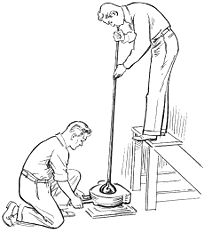
Glassblowing is a glass forming technique which was invented by the Phoenicians at approximately 50 BC. The evidence of the earliest glassblowing were found from waste of an old glass workshop, which were mainly findings of fragrance glass tubes and tiny glass bottles, thought to be used for religious waters and oils. The studio glass movement of 1962 began the popularity of glass blowing as an art. This is when Harvey Littleton,  a ceramics professor, and Dominick Labino,  a chemist and engineer, held workshops at the Toledo Museum of Art, where they started experimenting with melting glass in a small  furnace and creating blown glass art. 


Discovery: 
A major breakthrough in glassmaking was the discovery of glassblowing, between 27 BC and AD 14, attributed to Syrian craftsmen from the Sidon-Babylon area. The long  metal tube used to blow the glass has changed very little since then, so the techniques need to blow glass is relatively the same, and if anything has just gotten easier as the time as gone on. In the last century BC, the ancient Romans then began blowing glass inside moulds, greatly increasing the variety of shapes possible for hollow glass items. Although glass blowing can be a dangerous task, many people enjoy the beautiful and unique products from them, making it a skill many people are passionate about.


Inventor:
Dominick Labino was an internationally-known scientist, inventor, artist and master craftsman in glass. Labino's art works in glass are in the permanent collections of more than 100 museums throughout the world. Dominick Labino was trained as an engineer at the Carnegie Institute of Technology  and began his professional career in Illinois.  Having always worked with glass, he wanted more ways he could produce creative pieces unlike any other. Dominick Labino then worked with Harvey Littleton and worked with mastering of melting glass for some time, he then had the idea of glass blowing when he saw an air bubble trapped in a small piece of the melting glass. The two glass makers then greated a long metal device to help blow air into glass. This was now the start of glass blowing as an art.


Impact on the Human World:
Glass blowing is an art that has been loved by people for many years. From making this as small as ornaments and bottles, to major glass statues; glass blowing is adored by many artist. Any thing that adds something new to the art industry is the main topic for discussion for some time, however with glass blowing since it has been around for sometime, it is always popular with art because of its unique and individual items.


Journal Review: 

"Artists Experiment With Glassblowing" is a Journal article written in 1964, shortly after glass blowing became a popular art. The article discribes the techniques used for glass blowing and all the fantastic new pieces that are now able to be in the art world. The article explains that after they would finish a piece they would display it for sometime, because of how interested people would be in the beauty that could be made with glass. This show how excited people were for this when it was first discovered and is still lasting now. 


Bibliography:

"Artists Experiment With Glassblowing" from Wisconsin State Journal, 1964 July 12 . Harvey K. Littleton papers, Archives of American Art, Smithsonian Institution.

Thrall, A. (n.d.). A brief history of glass blowing. Retrieved from http://www.neder.com/glassact/history.html  

Wertheimer, J. (n.d.). History of glass blowing. Retrieved from http://www.glassblowing.com/hotglass/history.php 


The Internet


The Internet


Figure 1


Introduction:


How many people get home from school and immediately sit down at there computer and use the internet? You use it for Facebook, homework, video games, and email. Most people would be lost without the internet. I know I would. But does any one know how the internet was invented? Or how the internet has improved todays medical technology?


Discovery:


What is the internet. The internet is a global connection network that is interconnected buy fiber optic cabling to thousands of networks. The internet was brought into the world in 1965 and would change your world forever. The internet was originally designed to be used by the military during the Cold War but was soon used buy scientist to communicated to each other about there discoveries. The military need a way to communicate with universities with out being disrupted by bombs and or spies. The form of internet that was to solve this problem was called ARPANET (Advanced Research Projects Agency Networks). The make the ARPANET scientist used the basic design of the telephone network and added Packet Switching to it. Packet Switching divides the data into small blocks. Each block or packet can take a different path then the others to get to the destination were the blocks are reassembled into the original message. In September 1969 the first Packet switched computer network was installed at UCLA. By December three more had been installed in the United States. The internet started to grow rapidly in popularity and by 1971, the same year email was invented, there were 15 computer networks set up at major universities all over the United States. In Hawaii scientist created the ALOHAnet that allowed the many small islands of Hawaii to communicate with each other. This network became the first multi-access networks that, using radio technology, allowed users to share a single broadcasting medium. In 1980 a company called BITNET (Because it's Time NETwork) became the first email provider. Soon the internet had gone from a nationwide infrastructure to an international phenomenon. In the early 1980's set up an organization with the goal of bringing the internet to all French citizens. In the 1990's the world saw the creation of the World Wide Web (WWW). Over the next few years the internet saw major changes (mostly in speed) and by the end of the 1990's almost the entire world was connected to the internet.


http://www.inventionreaction.com/famous-inventions/Internet


Influence on the World:


As technology continues to advance as does the internet. The internet can now be used many diffident ways such as on cell phones or video game consoles. Today we use the internet for almost very thing. We can, talk to other people, pay taxes, get a college degree, and host business meetings through a video chat. The creation of search engines allows users to find information quickly and easily. The internet has even helped to save lives. Because of the internet doctors can get test results and important information faster therefor saving peoples lives by starting treatments earlier.


Inventor:


The Internet does not have a solo inventor and is made the way it is today by every person that has ever used the internet.


Journal Article:


In the journal article How the Internet Infrastructure Works Jeff Tyson explains how the internet grew and all of the different pieces need for it to work. This article is a great help to anyone who would like to find out how the internet works.


http://computer.howstuffworks.com/internet/basics/internet-infrastructure1.htm

Sunday, February 27, 2011

TIck Tock By Nico Moschetto

I. Discovery

The alarm clock has been a life saving tool for many years. the first and earliest notes of an alarm clock were founded in germany around the 15th century. the concept was quite simple back then, most alarm clocks had a cam (a rotating or sliding piece in a mechanical linkage used especially in transforming rotary motion) that rotates every 12 hours. they also have a notch that which a lever falls onto when the alarm is triggered releasing gears that drive a hammer onto a bell. classic right?

Hubbell marine movement with 1865 patent datefigure 1

II. Discovery

while i just recently explained how the olden day alarm clocks work, the first recorded inventor or maker of the alarm clock was Joseph Knibb in 1690. these facts mean nothing seeing that alarm clocks were starting to emerge around the 15th century. the english clockmakers started emigrating to the US around the 18th century bringing with them new ideas for the alarm clock. they started sprouting up around the 1800s like crazy and from then on there have been gigantic modifications ranging from digital to, well, now just digital. one of the last major old gear clocks standing is of course big ben in England.

III. digital time keeping

during today's technological enhancements, digital time keeping seems to be in everything from your ipod to your car. everything is on the same digital system. although if you have an old car i think you may still do it manually. these digital time keeping advances are vital to our daily life. imagine your life for one day without the advantage of having the time on your pocket nessecities of today. asking for the time sounds pretty old and annoying during these times. just a little something to think about.
figure 2

IV. Impact on the World

digital time keeping has been one of the quietest advantages of today's modern technonlogical world. its almost as if nobody thought twice about how important time keeping was, that is until daylight savings was founded. these improvements on the clock have been great for our modern society. i always love being able to pull out my phone and check the time. anyway im greatful for many of the advantages we have in life so yay time!

V. journal article

My most helpful article was the History of the Alarm Clock (go figure). this article was helpful to me because it was very clear on its facts and helped explain some of the history to me. it also provided me with some resources like pictures and diagrams to help me understand the make up of an alarm clock. there were also interesting little tidbits about major contirbutors of the alarm clock invention.

Works Cited

http://clockhistory.com/alarmClockHistory/

http://en.wikipedia.org/wiki/Cam

http://inventors.about.com/od/cstartinventions/a/clock.htm

Friday, February 18, 2011

Plants on Security Duty - Kelby Fruecht

Plant Security

I. Introduction

Imagine if you were walking in an airport and all you had to do was check-in and buy your tickets to be able to just jump right on a plane. Imagine if we no longer had to go through airport security in order to get on a plane. Well, even though this may seem impossible to do without jeopardizing our own safety, just recently there has been a break through that might change the way security operates not only in airports, but also in government buildings, schools, and any other facility or place that would require more security to ensure our safety. The answer to this question is a plant. Not just any type of plant, but a plant genetically engineered to identify and notice when a bomb is nearby or in the same area where the plant is planted.


II. Discovery

So you may be asking just how it’s possible for a plant to replace the security that checks our bags in airports. Well, the answer lies with changing the genetics of the plant. Professors and Scientist at Colorado State University have discovered a way to change the genetics of the plant making it capable of turning white when TNT and other explosive odors are sensed in the air. Head Professor June Medford states, “Plants can’t run or hide from threats, so they’ve developed sophisticated systems to detect and respond to their environment.” They were able to take the plant and alter the genetics of the chromosomes and “program” the plant to turn white when it senses the explosive material in the air. They made the plant so when it does sense TNT or other bomb material; it triggers the plant to drain all of the chlorophyll out of the chloroplast, which is the green pigment found inside of plants and is also used in photosynthesis. The benefits of having these types of plants as part of are security are more beneficial than you would suspect. While having a bomb-sniffing dog that cost thousands of dollars in order for the dog to be trained, taking care of the dog with food expenses, and also paying for a cop to be at the airport is really expensive. They also aren’t capable of covering every single area of the airport and most importantly is that a dog isn’t 100% accurate. There are some times when the dog accidentally doesn’t detect the scent either because the dog was temporarily distracted or the smell wasn’t strong enough. As for the plant, it is predicted that each of these plants will only cost about a few cents! What is also remarkable about the plant is that they are 100 times more sensitive than the

nose of a dog!

Here is a video link to a good overview video:

http://www.youtube.com/watch?v=kObTt_dR7IM&feature=player_embedded

Below is a picture of Prototype Plant Sentiels:


III. Biography of Investigator


The Investigator of discovering this capability is Professor June Medford. She is currently a professor at Colorado State University where she made this discovery in plant genetics. She earned her Ph. D. for Synthetic Biology at Yale University. While the research of this new plant to complete the plant characteristic is underway, Medford confidently believes that the research and understanding of the plant will be completed in just three years. Her goal is to make the plant not only react faster, but also make the plant capable of reacting to more than one substance. With a 7.9 million dollar fund from U.S. Defense administration, the goal of perfecting the plant could come true. Although she is a new face in the science community media, she definitely will be heard of in the years to come once this genetically enhanced plant is perfected.

IV. Impact on the World/Humanity

The link below is to an AWESOME video that shows how this new discovery can change the world! Must Watch!!

http://www.youtube.com/watch?v=sj0Zom2SRmE&feature=player_embedded#at

This new invention of changing the genetics of a plant can change our world forever. We would no longer have to spend the unnecessary amounts of money in order to keep us safe from possible terrorist attacks and bomb threats. Every single airport in the world would be able to have a biological security that will not only ensure the safety of countries whose airports are vulnerable to bomb penetration because they aren’t able to afford the modern security that the United States has set the bar for. This security innovation has the possibility to lowering the price of your next plane ticket because flight companies would no longer have to pay for the type of security you see at our airports. We would no longer have to pay for this extra expense on the flight ticket. These plants might find its way in our airports in the next few years. This breakthrough could possibly be the answer to not only a safer world, but also a more affordable one as well.


V. Journal Article Review

The Huffington Post looked like a reliable source for the information that I found on my topic. I also confirmed its information from other reliable sources and was able to compile the right information about this new discovery. Although it isn’t too big of a source, it gave me a good grasp of the general overall idea of this genetically changed plant. I thought this was a good topic because it totally ties in with what we are learning in class and Professor Medford and this new invention is a prime example of how we can apply what we learn in the class room to invent things that we never thought possible.

Citations:

http://www.huffingtonpost.com/2011/01/27/bombdetecting-plants-colo_n_814848.html

http://www.foxnews.com/scitech/2011/01/27/bomb-sniffing-plants-fight-terrorism/#ixzz1EHSb3qs4

http://gizmodo.com/#!5744309/professor-breeds-bomb+detecting-plants

http://www.biology.colostate.edu/faculty/medford

Hot Air Balloon by Lisa Dunleavy

Introduction
Up, up, and away! Have you ever looked up into the sky and seen bright colors floating in the sky in the shape of a balloon? Then do you wonder how hot air balloons work? Hot air balloons were started by an array of scientists who worked off each other’s discoveries in the 1700s, and today it has turned into a fun leisure activity or a commercial advertisement.
Discovery
There were two brothers who launched the discovery of hot air balloons, Joseph Michael and Jacques Etienne Montgolfier. In 1782, these brothers hadn’t been inventors, wanted to investigate why smoke rose. Furthermore, they wanted to know if smoke could life a person into the sky. Also, humans have always been intrigued by the thought of being able to fly like birds. The invention of the hot air balloon made flight in the air possible (First Hot Air Balloon).
Inventors
Although, Joseph Michael and Jacques Etienne Montgolfier were the inventors of the hot air balloon, they couldn’t have done it without the help of Henry Cavendish. In 1766 Henry Cavendish was the first scientist that was able to isolate hydrogen. Hydrogen is the lightest gas, lighter than air. He then had the idea that it could be used to life things from the Earth because of its lightness. However, he didn’t further per sue his idea (Hot Air Balloon History).
Joseph Michael and Jacques Etienne Montgolfier lived in France and were paper makers. Their father wanted them to have a good education and sent them away to go to a private school. So they were educated, but after their education they continued to work on their paper mill. In 1782, they started their experiments to find if it really was possible to lift things from the Earth by using hydrogen gas said by Henry Cavendish. They filled a silk bag with hot air. The silk bag was less dense than the air, so it floated. Then the two brothers made their experiment a little bigger. Instead of using a small silk bag, they made a large bag that was shaped like a sphere. Then, they filled it with hot air from a fire and sent farm animals up in it. The farm animals were in a basket hanging below. After this success, they decided to send a human up in the hot air balloon. On November 21, 1783 they sent Pilatre De Rozier, a scientist, and Marquisd’Artandes on a hot air balloon flight in Paris. They were tied down for safety; however, they reached a height of 300 feet and stayed in the air for 20 minutes. Once the news of this success spread, the advancements on the hot air balloon spread rapidly. December 1, 1783 Jacques Charles and Moel Roberts lasted 27 minutes in the air in Paris as well, being the first officially in flight (in the other experiment, the balloon was tied down). Then, on June 4 in 1784, Elizabeth Thible became the first women to fly in a hot air balloon in Lyons, France.
What is a hot air balloon made of?
The major principle that makes the hot air balloon work is that hot air rises in cooler air. Why? The hot air rises because it is less dense. There are three main parts to a hot air balloon, the envelope, the basket, and the burner (How The Balloon Works).
The envelope, shown in figure 2, is the actually balloon part of the hot air balloon. Today it is made of nylon strips which are called gores. These gores go from the bottom of the envelope (balloon part) to the crown. The bottom two thirds is made of a combination or polyester and nylon this is similar to what a parachute would be made of. The envelope has to be woven extremely tightly in order to be air tight, keeping in the hot air which makes it float. Polyester and nylon are used because they are both lightweight and they are resistant to the high temperatures that are required for the balloon to rise. The bottom part of the envelope is called the skirt. The skirt is made of a material called Nomex. This different material is used because it’s extremely fire resistant (it’s the same material that fire fighters use) and the base of the envelope is what’s most exposed to the flames. The top one third of the envelope is made by the material hyperlast. Hyperlast is used because it is extremely strong. Also, it has a silicon coating on it to prevent mould or fungi build up. There are many different shapes, sizes, colors, and designs that envelopes come in.
The basket is another important part in hot air balloons as shown in figure 3. Without the basket there wouldn’t be any passengers or a conductor, and furthermore, there wouldn’t be a spot for the gas cylinders. Today, baskets are made of Kooboo and Palambang cane because of their lightweight, flexibility, and durability. It’s important to be flexible and durable for landing because when the hot air balloon lands, there is a lot of force exerted on it and the flexibility helps it absorb some of the pressure. Baskets come in many different shapes and sizes, but there are two main types of baskets, Open baskets and T-partition baskets. The open basket is completely open so that you could walk around on the whole thing as seen in figure 4.
Whereas the closed basket, as seen in figure 5, has different sections.
The last key component of the hot air balloon is the burner shown in figure 6. The burner is what allows the balloon to go in the air. The propane needed to heat the air is stored in cylinders in the balloon basket. The propane is stored in very compressed cylinders and is ignited by a pilot light. The flame burns and heats up the metal around it, heating the air. There are many different types of burners depending on the size of the hot air balloon and there can be quieter flames also.
Once you get up, how do you get down? First, you go up by opening the propane valve, which goes to the burner and lights a flame which then goes into the envelope. The more you open the valve, the more heat is released, so the rate of going up increases faster. Now, how do you get down? The parachute valve at the top of the balloon is a circle that has been cut out of the top of the balloon. Attached to the circle is a chord. The pilot just needs to pull the chord so the valve opens. This decreases the temperature bringing the hot air balloon closer to the ground (How the Balloon Works).
How is it used today?
The hot air balloon is used all over the world today. They are used for leisure activities, commercial flight, advertising for companies, sport, and weddings. You can go in a balloon ride for fun, for your wedding, or even to advertise your business. Hot air balloon has now even become a sport (How The Balloon Works)!
Conclusion
The hot air balloon was started by two brothers, who worked in a paper mill, Joseph Michael and Jacques Etienne Montgolfier (First Hot Air Balloon). Then, many scientists built off of their ideas. Today, their advances and trails have made a great impact on the world. Up, up, and away!
Journal Article: Hot Air Balloon Engine
This journal article talks about the balloon engine. It talks about how a balloon works and the math behind the engineering of the balloon. It discusses the ability to make an engine for a hot air balloon. The costs that it would have and also how it would impact the environment. It also talks about the heights that it could and the potential that it has (Hot Air Balloon Engine).
Bibliography
"How the Balloon Works." Eballoon.org. Web. .
"The First Hot Air Balloon." Web. .

"Hot Air Balloon History - Invention of the Hot Air Balloon." The Great Idea Finder - Celebrating the Spirit of Innovation. Web. 10 Feb. 2011. .

“Hot Air Balloon Engine.” Renewable Energy. Elsevier. Web. .

Unknown exteriors (the universe) – Gustavo Grinsteins


I. First idea of the universe

The Greek mathematician Pythagoras Of Samos had a cozy picture of the universe. The earth was at the center, surrounded by a series of ever larger spheres, having the sun, the moon, the stars, and the other planets as part of these system. As the spheres turned Pythagoras describe that movement as a musical note. As they turned together they produced a perfect harmony (harmony is a state recognized by great philosophers as beauty, a compound is termed beautiful only when its parts are in harmonious combination). After this theory Aristotle a Greek philosopher tried to solve the idea of what caused he spheres to move, By the earth being static Aristotle thought that it wasn’t the cause of the movement of the spheres, instead he inferred that the movement of the outer most sphere was causing the movement of the other spheres. But what was causing this last sphere to move? Aristotle answer was something he called “primer mover” that resembled God. The universe described by Aristotle and Pythagoras was finite. Beyond the outer most sphere there was only the “prime mover”.

II. The Copernican Universe: “ A Solar System”

Nicolaus Copernicus Change the hole idea about the earth being the center of the universe. Copernicus borne in Poland was an astronomer, a student of economics, law and medicine, but his doctorade in canon law and spend his life as a canon in the cathedral in Frombork. This fact is interesting because the church was insistent in that the earth was the center of the universe. Many people before him thought that the Earth and other astronomical figures revolve around the sun (one of the ancient Greek astronomers, Aristarchus, did have ideas similar to those more fully developed by Copernicus but they were rejected in favor of the geocentric or earth-centered scheme as was espoused by Aristotle). Copernicus was a man of high reputation so he was allowed to present his theories in a series of lectures in Rome. The Copernican universe had the sun at its center with, in order, Mercury, Venus, earth, Mars, Jupiter, Saturn and then the stars rotating around it. The “revolution of the celestial spheres”, probably was the greatest achievement in that era.

III. Galileo Galilei

Galileo was a brilliant astronomer, mathematician, physicist, and artist. Galileo learned of the invention of the telescope in Holland. He devised a vastly superior model. Galileo made a series of profound discoveries using his new telescope, including the moons of the planet Jupiter and the phases of the planet Venus (similar to those of Earth's moon). This caused Galileo support in the theory of the Copernican universe, causing to put him in direct opposition to church teachings. He was placed under house arrest and forced to deceive his conclusions.


IV. Science detects a “big bang” at the beginning of time.

We certainly know that our universe exists, however, this knowledge alone has not satisfied human request

for further understanding. Our curiosity has led us to question our place in this universe and furthermore, the place of the universe itself. The Big bang is a theory that asserts that about 13.7 billion years ago the universe emerged from an infinitely small, hot, and dense point that was called “singularity”, and began its expansion at once. Within three minutes after the explosion the first atoms were emerging. After this the production of light elements, like hydrogen, began to appear in vast numbers. All this took minutes, but it was another 380,000 years before the hydrogen gas cooled sufficiently to form molecules, and 200 million before the first stars coalesced. Everything was rushing outward from that initial burst. The big bang theory first began to take shape in 1927 when Georges Lemaitre publishes the theory.

V. Large Hadron Collider: “the big bang experiment”

The Large Hadron
(LHC), is the largest particle accelerator in the world, which has the aim of reproducing conditions similar to those produced during the Big Bang in order to study the origins of matter,and see how matter behaved a tiny fraction of a second after the Big Bang. Researchers have some ideas of what to expect, but also expect the unexpected. The large particle accelerator is located in a 27 kilometers-long underground tunnel, which straddles the border between France and Switzerland. Inside the tunnel, proton beams will be accelerated at speeds close to the speed of light and will be made to collide. This will allow conditions of extremely high-density energy to be reproduced, close to those of the initial instants of the universe, the Big Bang. The collider was first proposed more than 20 years ago, and the beam for more than ten years.

VI. Sources